It's been a while since it has rained on the island and we are desperate for fresh water! The water tanks are empty, the bore hole containing ground water is dry, and we are subsisting on the emergency tank that the village shares in tough times like these. We have resorted to bathing in the ocean, not doing laundry, and using water very sparingly.
Other than that life on Kia is swell. I am deep into designing and planning a community leadership training workshop for the fishermen and women of the island. The program will be aimed at teaching the fishermen about the scientific basis of marine resource management and give them the information and knowledge to equip them to sustainably manage the local qoli qoli's (traditional fishing grounds). It is a huge undertaking and is a great challenge given the culture, customs and mentality of the people on the island. They are very set in their ways, beliefs and behaviors. Every day is a challenge and we are slowly trying to penetrate the people and get them to open their minds to new ideas and ways of doing things. Its been a frustrating but exhilarating experience.
When I am not working on the workshop planning I occupy myself beach-combing, taking photos, learning to cook traditional Fijian dishes and socializing with the women of the village. I have learned to weave some and have developed a knack for weaving rings out of palm leaves. There's a huge influx of jellyfish in the water recently so I haven't been able to snorkel as much as I would like. Last week we had a beach cleanup with all the children of the village. It was fun and we picked up a lot of trash but there is still so much more to collect!I've had some awesome experiences on Kia- everything from watching meke (traditional dance) to hiking the highest peak on the island, watching a colony of fruit bats emerge at dusk, and volunteering at the school. Not to mention eating fresh, tropical fish for dinner almost every night, watching picture-perfect sunsets, and making wonderful friends. Kia is a special place.
Bula Vinaka from Fiji!
Life on Kia is a dichotomy between productivity and leisure. Villagers work hard to sustain their lives and families. Women spend their days cooking, washing, looking after children, weaving, fetching water, and other daily chores. Men primarily fish and do other things around the village as needed- building/repairing houses, gathering firewood, tending crops etc. Every family in the village has a small parcel of land and mostly grow root crops like taro and yucca. Fruit trees are abundant on the island and there is usually a fresh supply of papaya, coconut, mango, breadfruit, and bananas. When people are not busy working, they like to loaf around. Most houses don’t have any furniture, less a cupboard for dishes, and everyone sits and lies on woven mats on the floor to do everything, eat, sleep, etc. When all the chores are done people lie around, relax, talk, smoke, and lounge.
The people of Kia are warm and welcoming and we have been well-received. Women invite us to come have afternoon tea with them and men are always eager to talk to us and invite us to sit with them. All the women have very short hair and they are enamored at my long, curly hair. The children are endearing; some are still quite shy while others have transcended the ‘new white girl in the village’ notion. Several times they have observed me on the beach collecting shells and coral and they periodically bring me the prettier ones they encounter. I have spent time teaching them to play duck-duck-goose, braiding hair and playing in the ocean. Three evenings a week we help the children with their homework; they need special attention in the areas of math and science and we have been organizing lessons to supplement their classroom assignments.
Yaro is a very religious village. The villagers have church almost every day. Sunday at 7am, 10am and 6pm, Monday is men’s group, Tuesday is women’s, Wednesday is cell group, Friday is youth. The villagers are especially fond of singing and have regular choir practice. Fijian is not a particularly easy language to learn, but I am trying. The words sound similar to Spanish so they are not difficult to pronounce, but they are very foreign and hard to remember.
I spent my first 2 weeks transitioning to island/village life and have begun planning and preparing for the work that lies ahead. My task is to design and implement a series of workshops for the fishermen and women to raise awareness about marine conservation. I will be formulating workshops to discuss and explain important issues relating to the harvesting of marine resources such as the importance and conservation of biodiversity, the role and importance of preserving endangered species, the biological consequences or poor fishing practices, and the importance of gathering traditional knowledge of the local fishery to establish a baseline for future fishery monitoring and management. The task is great, but I am looking forward to the challenge!
Tursiops Tales
On my last assignment in Mississippi, I was assigned a rather interesting boat captain. The most adorable little, old man- a veteran shrimp trawler and retired dolphin trainer! Turns out he trained the dolphin who starred in the original movie 'Flipper.' No joke. He brought in his scrap book of old photos to prove it. SO awesome!
I want to turn this into a postcard! Mr. Robert Corbin was the first dolphin trainer in the world to achieve a tripple-dolphin jump!
Marsh Marvels
I've spent the spring and summer months of 2011 tromping the marshes and beaches of the Gulf Coast, from Venice, Louisiana all the way to Destin, Florida. This year's projects included the Coastal Wetland Vegetation/Marsh Assessment, Submerged Oil Characterization, and Marsh Edge Sandy Shoreline/Biota Monitoring. Its been a long, hot, fun summer and things are finally winding down for this field season. Below are pics and tid bits from the summer's adventures....
Sunrise at the state dock in Bayou La Batre, AL
A shrimp trawler coming in after a night of shrimping hungry birds waiting for freebies
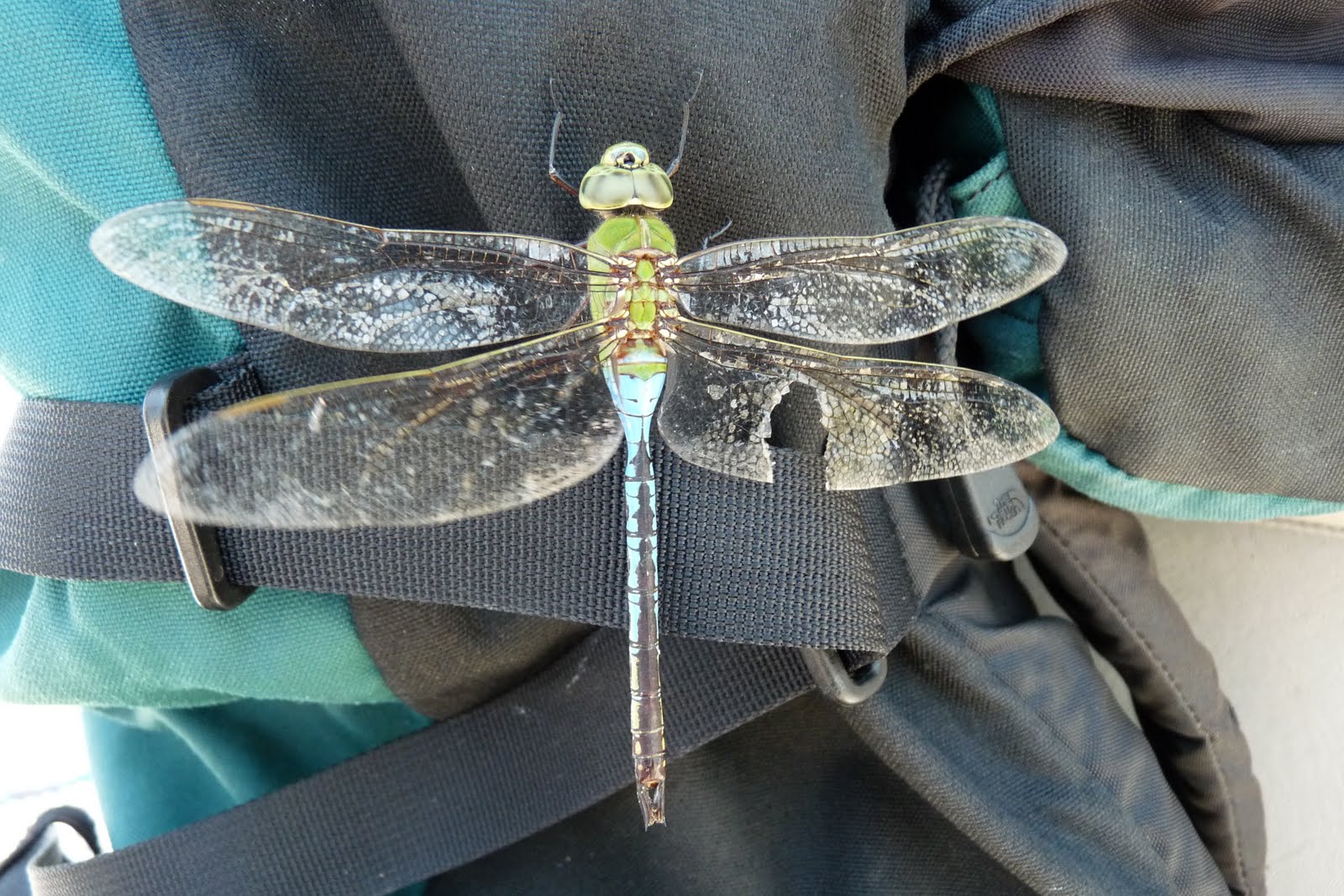
This guy landed on my backpack one afternoon; I suspect he was attacked by a bird because he had a chunk of one of his wings missing and 2 broken legs, not to mention he was lethargic and did not move for quite a while. Needless to say, he became a specimen in my personal naural history collection.
A sandbar bird hot spot on Dauphin Island, AL
Great Blue Heron
Mud flats in Venice, LA
We snuck up on this guy!
Sunset in Bayview, LA
There is a huge amount of diversity in Odontonates in the marsh lands!
My first time seeing a water spout (a tornado on the water)
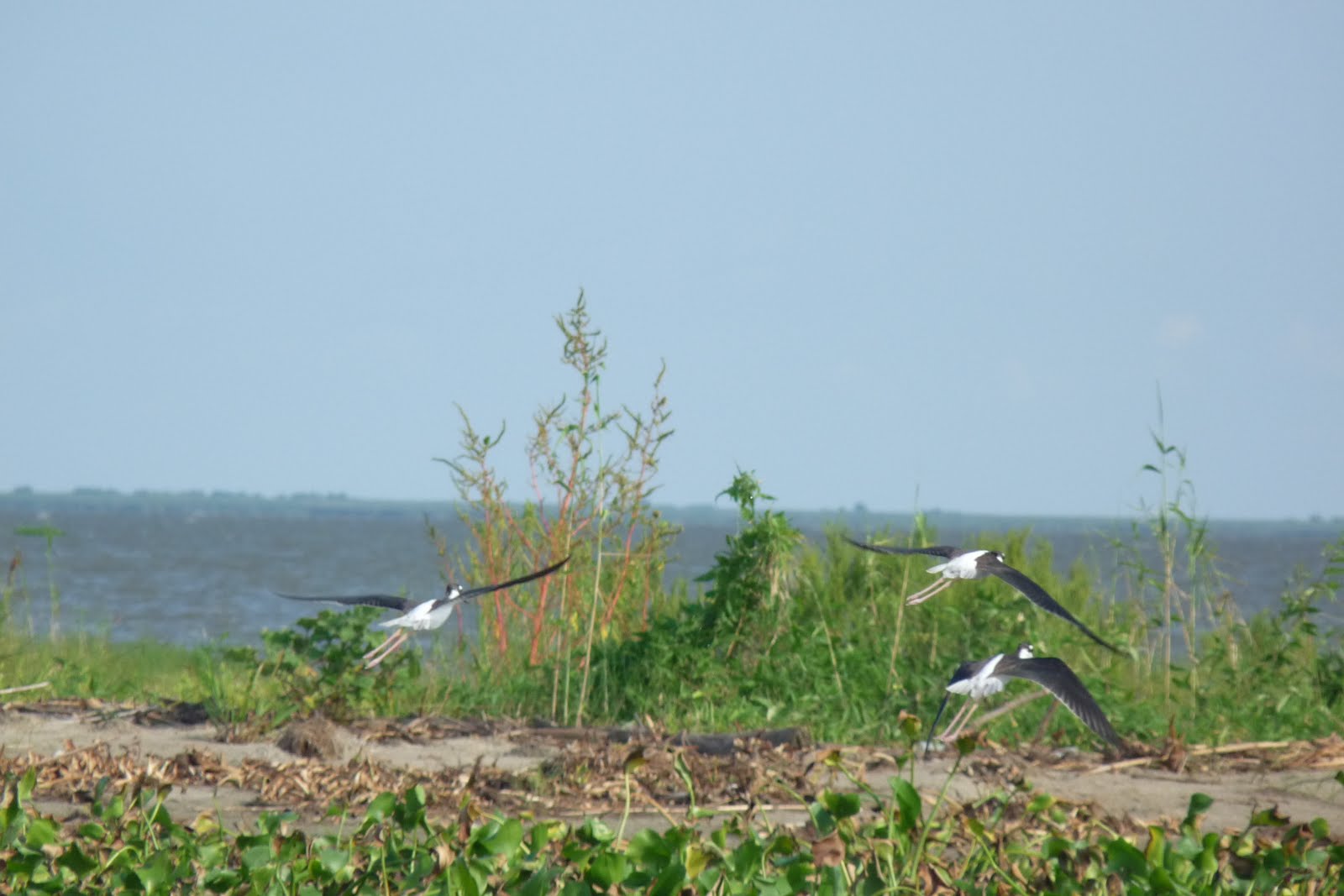
Black-necked stilts, one of my favorite marsh birds
Chrinum lillies
Feathered house guests
A friend of mine works at a raptor rehabilitation center caring for orphaned and injured birds of prey. Recently, someone brought her a pair of fledgling wood thrushes and, not being able to to turn them away, has been raising them herself. She came over for a movie night on my break back home and I entertained these little guys for an evening....precious!
Oil on the Marsh
Even though its been over a year since the tragedy of Deep Water Horizon, evidence of the environment-degrading contamination is still present in the wetlands of Louisiana. Some of our sites that were hard hit with oil bare a very tangible reminder of the fossorial fossil fuel gone surface.
This photo shows a thick, grey sludge of weathered oil blanketing the soil. At first, the oil seems nothing more than the anoxic, primordial paste that anchors the beds of marsh grass, but upon closer inspection, the sticky texture and chemical pungency are a dead giveaway that its oil.
Harshly-impacted sites bare the erosion scars of oil toxification. In some areas, large swaths of dead vegetation are present, in others matted beds of root matter, and in the worst, nothing but open water, with all the vegetation gone completely.
So far no one truly knows the role that the spill has played in the erosion of the marsh. Empirical evidence suggests that damage could be attributed to oil contamination, but we are not entirely sure of the natural erosion that takes place, so it’s hard to compare and make a definitive conclusion. It’s going to take years upon years of collecting data and samples to document and analyze the aftermath of what has so far been the largest oil spill in the history of our planet.
Don't judge a book...
At first glance, the vast salt marshes in the Gulf of Mexico seem like a monocultural tesselation of seagrass and water. But take a closer look and you will be amazed at the microcosm of life that exists in its diversity of microhabitats. The expansive flats of marsh grass are teeming with life, concealed in their verdent blades are a menagerie of birds, fish, and invertebrates. When we motor up to a site, my eyes have to adjust from staring at a blanket of marsh grass, to carefully examining the activity in the marsh. If you are patient, and keep a watchful eye, the grass will come to life. Seaside sparows and red-winged blackbirds bustling among the blades, tiny crabs scuttling in and out of mudholes, snails noisily munching on blades of grass, minnows darting around stems. And once you really start to pay attention you notice the gator slides, bird nests, and all the abiotic features that the animals create in their marshland paradise.
Spider lillies
The eggs of an oyster drill (a predatory snail) inhabiting an oyster shell
A tiny, flowering succulent
Subscribe to:
Comments (Atom)